Last updated October 15, 2026
ADU Cost Breakdown: The San Diego Homeowner’s Reference for 2026
The median San Diego ADU quote in 2025 was around $280 per square foot, but completed projects consistently land 15 – 25% higher. The gap almost always lives in the same four categories: utility connections, permit and plan-check fees, soil reports, and the change orders that follow design decisions made after construction starts. This guide names every cost category in a San Diego ADU project and gives you realistic 2026 ranges for each, so the number you sign is the number you pay. For a broader overview, see our Complete Guide to ADU in San Diego.
Quick Answer
A detached ADU in San Diego will cost between $220,000 and $450,000 all-in during 2026, with most one-bedroom units landing near $280,000. Attached ADUs run 20 – 30% less, and garage conversions are the most cost-effective path at $120,000 – $230,000. The single most important number to verify before signing any contract is your utility connection fee, because that is the line item most often missing from base quotes.
Table of Contents
- The Line-Item Cost Register: Every Category in 2026 Dollars
- The Four Costs Missing From Most San Diego ADU Quotes
- San Diego Utility Connection Fees: Why Your Neighborhood Changes the Price
- Attached vs. Detached vs. Garage Conversion: The Real Total-Cost Difference
- What a Written Fixed-Price Contract Should Guarantee
- Permits, Plan Checks, and the San Diego Timeline
- Financing an ADU in San Diego Without Surprises
- Common Mistakes to Avoid
- When to Call a Professional
- Frequently Asked Questions
- The Bottom Line
The Line-Item Cost Register: Every Category in 2026 Dollars
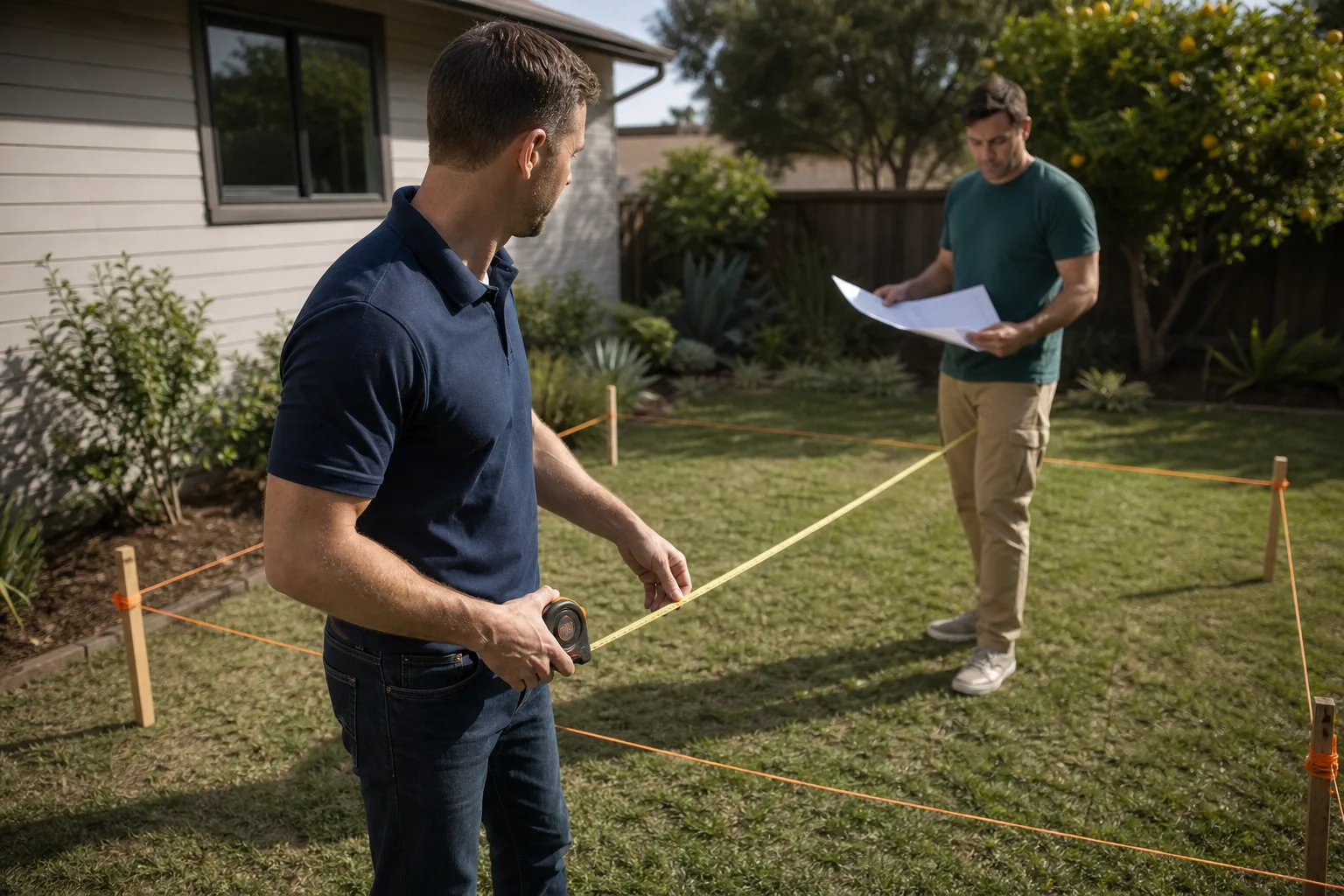
Most San Diego homeowners see an ADU quote with three or four line items and assume that is the whole picture. It rarely is. A complete cost register for a detached one-bedroom ADU of roughly 500 square feet, built in San Diego during 2026, breaks down like this. These ranges reflect what we have seen across projects in Clairemont, North Park, Mira Mesa, and similar mid-city lots, where site conditions are typical but not uniform.
Site Work and Preparation
- Low: $12,000 – flat lot, easy access, minimal demolition, no tree removal
- Mid: $22,000 – sloped lot requiring light grading, some over-excavation, temporary fencing
- High: $40,000+ – steep canyon lot, retaining wall needs, significant tree or root work, poor soil requiring remediation
San Diego’s varied terrain changes this number more than any other single category. A lot in University Heights with a 15% grade will cost twice as much to prepare as a flat lot in Allied Gardens.
Foundation
- Low: $14,000 – slab-on-grade on stable soil
- Mid: $20,000 – raised foundation with crawl space, common in older San Diego neighborhoods
- High: $35,000+ – pier-and-grade-beam system required by steep slopes or expansive soil
San Diego’s coastal zones often require deeper footings than inland areas. The city’s geotechnical requirements in Mission Bay-adjacent neighborhoods can add $8,000 – $15,000 to foundation work alone.
Framing and Shell
- Low: $40,000 – simple rectangular footprint, standard materials
- Mid: $55,000 – vaulted ceilings, additional windows, upgraded lumber package
- High: $75,000+ – complex rooflines, steel moment frames for large glass openings, custom structural work
If you work with a prefab system from Boxabl or Plant Prefab, framing and shell costs shift from on-site labor to factory production. The materials cost is often 10 – 15% higher, but site labor drops significantly and the construction timeline shortens. For lots with tight access, a prefab panel system can be the difference between a project that works and one that does not.
Mechanical, Electrical, and Plumbing (MEP)
- Low: $25,000 – single bathroom, mini-split HVAC, standard electrical panel with capacity to spare
- Mid: $40,000 – full kitchen with gas line, upgraded electrical subpanel, two-zone climate control
- High: $60,000+ – new main panel upgrade, trenching for separate meters, EV charger rough-in, solar integration
This category carries the most uncertainty for San Diego homeowners because it depends heavily on what exists under your lawn and behind your walls today. We have replaced main panels on at least a third of the ADU projects we build from our ADU Builders in San Diego practice, and it is never visible in an initial quote.
Insulation, Drywall, and Interior Finishes
- Low: $30,000 – standard trim, mid-grade flooring, basic cabinetry
- Mid: $45,000 – custom kitchen cabinets, quartz counters, upgraded bathroom tile, engineered hardwood
- High: $70,000+ – custom built-ins, high-end plumbing fixtures, designer lighting, premium flooring
San Diego’s Title 24 energy code now requires solar-ready panels and specific insulation values that older homes do not meet. Budget $5,000 – $9,000 for Title 24 compliance upgrades that are not cosmetic but are mandatory.
Permits, Plan Checks, and Soft Costs
- Low: $8,000 – simple conforming project, fast plan check, no variances
- Mid: $15,000 – typical San Diego plan check with revisions, school fees, sewer capacity charge
- High: $30,000+ – coastal commission review, historical district approval, variance hearings, stormwater mitigation
The City of San Diego charges a range of development impact fees that many contractors exclude from initial quotes. We include them in our written price. Ask every bidder whether their number includes plan check, building permit, sewer capacity, and school fees – in writing. For details on what to expect, read ADU Permits, Codes & Inspections in CA: What You Need to Know.
The Four Costs Missing From Most San Diego ADU Quotes
Every week we talk to San Diego homeowners who received a base quote that looked exceptional, only to discover four numbers were missing. None of these are hidden by dishonesty. They are hidden by convention: the industry habit of quoting construction costs only, leaving out the elements that happen before and after framing. Here is exactly what gets omitted, and how to surface each one before you sign. Watch for these ADU Warning Signs: A San Diego Homeowner’s Reference Guide.
1. Utility Connection Fees
San Diego Gas & Electric connection fees for a new ADU service range from $3,000 for a simple line extension to $25,000 for a new transformer or underground service in neighborhoods with aging infrastructure. The Public Utilities Department charges sewer connection fees based on equivalent dwelling units, and these are non-negotiable. Ask your contractor to submit a utility will-serve letter during the design phase. That document gives you the exact connection cost for your specific lot.
2. Soil Reports and Geotechnical Work
A standard San Diego geotechnical investigation costs $3,500 – $7,000. If the report finds expansive soil or liquefaction risk, as it does in parts of Mission Valley and the coastal bench areas, your foundation engineer will add $10,000 – $25,000 in remediation work. No honest builder can predict this without the report. A good builder will insist on the report before quoting a fixed foundation price.
3. Plan Check and Permit Fees
The City of San Diego Development Services Department charges roughly 2 – 4% of project valuation in permit fees, but the total bill grows with each plan check cycle. A project that sails through one plan check pays around $9,000. A project that requires three resubmittals pays closer to $18,000. Ask what review cycle your quote assumes, and who pays for resubmission fees if plans are returned with corrections.
4. Change Orders After Construction Starts
This is the quietest cost inflator in San Diego ADU work. Homeowners make finish decisions after framing begins because nobody walked them through a full finish schedule before signing. A kitchen faucet change from builder-grade to a mid-range brand adds $400. Three of those per room, across a kitchen and two bathrooms, adds $8,000. At Seedling ADU San Diego, every project includes a complete finish selection meeting before construction starts, so the price you approve is the price you get.
San Diego Utility Connection Fees: Why Your Neighborhood Changes the Price
Utility connection costs vary more by San Diego neighborhood than almost any other budget line, and the reason is infrastructure age. Older neighborhoods with overhead power lines and aging sewer laterals carry different connection costs than newer subdivisions with buried utilities and modern service capacity. Here is what drives the difference.
San Diego Gas & Electric
If your existing main panel has 200-amp service and spare breaker capacity, adding an ADU subpanel costs $1,500 – $3,000. If your home still has a 100-amp panel, which is common in homes built before 1980 across Normal Heights, Kensington, and parts of Point Loma, a full main panel upgrade runs $4,000 – $7,000 before any trenching or service line work. New underground service from the street can add $15,000 – $30,000 if SDG&E determines your transformer lacks capacity.
Sewer and Water
Connecting an ADU to an existing sewer lateral is usually $4,000 – $8,000 if the lateral is in good condition and grade permits gravity flow. If your lateral is cracked, which is common in homes built before 1970, replacement costs $10,000 – $20,000. The City of San Diego requires a sewer lateral inspection as part of ADU permitting, and repairs are almost never optional once the camera finds problems. A new separate water meter from the City runs $6,000 – $12,000, while a submeter off the existing service is typically $1,500 – $3,000 and is the more common path for an ADU.
What to Ask Before You Sign
- Has the contractor submitted a will-serve letter to SDG&E and the City for your specific address?
- Does the quote include the sewer lateral inspection and any required repairs?
- Is the water plan a separate meter or a submeter, and has the City confirmed the plan will pass?
- What is the assumed utility fee in the quote, and what happens if the actual fee comes in higher?
These four questions surface the real utility cost before you are committed. A builder who cannot answer them in writing has not done the legwork.
Attached vs. Detached vs. Garage Conversion: The Real Total-Cost Difference
Per-square-foot construction costs tell only part of the story. A detached ADU, an attached unit, and a garage conversion all carry different total project costs in San Diego because permits, site work, and utility scope differ by building type. Here is the complete picture in 2026 dollars for a comparable one-bedroom living space.
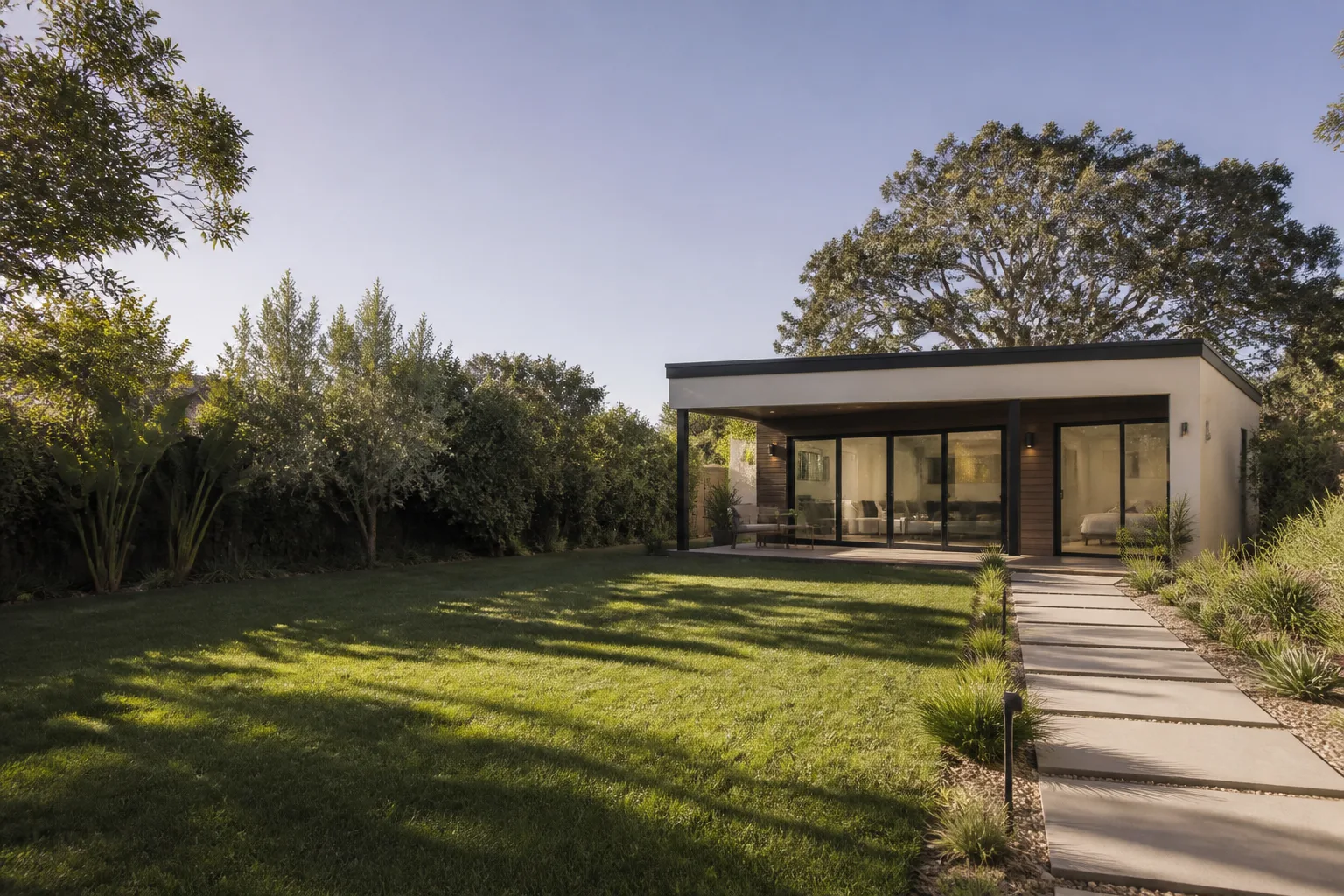
Detached ADU (New Construction, ~500 sq ft)
- Construction cost: $160,000 – $300,000 ($320 – $600 per sq ft)
- Site work and foundation: $26,000 – $75,000
- Permits and soft costs: $12,000 – $25,000
- Utilities: $8,000 – $35,000
- Total realistic range: $220,000 – $450,000
Detached units are the most expensive path and the most flexible. They offer full separation from the main house, which matters for rental income and multi-generational privacy. San Diego’s coastal climate also means outdoor space between the two structures is genuinely usable year-round, a real quality-of-life advantage.
Attached ADU (Addition, ~500 sq ft)
- Construction cost: $120,000 – $220,000 ($240 – $440 per sq ft)
- Site work and foundation: $10,000 – $30,000
- Permits and soft costs: $9,000 – $18,000
- Utilities: $5,000 – $20,000
- Total realistic range: $150,000 – $290,000
Attached units share a wall, a foundation edge, and often a utility line with the main house, which trims cost significantly. The trade-off is design constraint: the ADU must work within your existing roofline and footprint, and the separation between living spaces is thinner. For many San Diego families, especially those adding space for aging parents, attached is the right balance of cost and convenience. Our Home Addition Contractor in San Diego experience shows these projects move faster through plan check because the zoning complexity is lower.
Garage Conversion (~400 sq ft)
- Construction cost: $80,000 – $160,000 ($200 – $400 per sq ft)
- Site work and foundation: $3,000 – $15,000
- Permits and soft costs: $7,000 – $14,000
- Utilities: $5,000 – $18,000
- Total realistic range: $120,000 – $230,000
Garage conversions carry a unique San Diego consideration: the city now requires replacement parking in many neighborhoods when a garage is converted, which can mean a carport, a parking pad, or a one-car garage addition elsewhere on the lot. That replacement parking cost, typically $8,000 – $20,000, appears in the permits phase and is often missed by first-time quotes. We walk every Garage Conversion Contractor in San Diego client through the parking requirement during the first site visit, because it changes the total cost picture more than any finish choice.
What a Written Fixed-Price Contract Should Guarantee
A written fixed-price contract is only as useful as the specificity inside it. The point is not to freeze every material in amber; it is to identify which numbers can move, by how much, and under what circumstances, before work begins. Here is what a strong San Diego ADU contract should state, and what it legitimately cannot.
What Should Be Fixed in Writing
- Scope of work with a detailed finish schedule: specific cabinet line, counter material, flooring product, plumbing fixture brand, lighting package. If the contract says “mid-range kitchen,” it is not fixed.
- Utility connection assumptions: the exact fee used in the pricing, based on a will-serve letter or written utility estimate, with a stated process if the actual fee differs.
- Site condition assumptions: soil report findings, existing lateral condition based on camera inspection, expected grading requirements.
- Permit fee assumptions: the number of plan check cycles assumed, and who pays for resubmission fees beyond that number.
- Change order process: written approval required for any change, with pricing delivered before work on that change begins, not after.
What Legitimately Varies
- Unforeseen subsurface conditions: a buried concrete slab from a demolished structure, unmapped utilities, or soil conditions different from the report.
- City-mandated changes: corrections required by the plan checker that alter the design, such as additional shear wall or fire sprinkler requirements.
- Homeowner-initiated changes: finish upgrades, layout shifts, or added scope requested after the contract is signed.
The distinction matters. Fixed pricing that does not exist in writing is not fixed pricing. At Seedling ADU San Diego, every project receives a written price before any work starts, with line items a homeowner can actually verify. If a builder resists putting utility assumptions or finish schedules in writing, that is a signal the price will move later.
Permits, Plan Checks, and the San Diego Timeline
San Diego’s ADU permitting landscape has improved significantly since the state streamlined ADU laws, but the process still carries predictable costs and timeframes that affect your budget. Understanding the sequence helps you plan cash flow and avoid expensive delays.
The Standard Sequence
- Feasibility review (weeks 1 – 2): Confirm zoning, setbacks, lot coverage, and ADU eligibility for your specific parcel. Cost: $500 – $2,000.
- Survey and soil report (weeks 2 – 4): Topographic survey and geotechnical investigation. Cost: $5,000 – $10,000 combined.
- Design and engineering (weeks 4 – 10): Architectural drawings, structural engineering, Title 24 energy calculations. Cost: $12,000 – $25,000.
- Plan check submission (weeks 10 – 14): Submit to the City of San Diego Development Services Department. The first review cycle takes 4 – 8 weeks for a standard ADU.
- Corrections and resubmission (weeks 14 – 20): Most projects go through two to three plan check cycles. Each cycle adds 3 – 6 weeks.
- Permit issuance (weeks 20 – 28): Once approved, pay the permit fees and the permit is issued. Total permit and plan check cost: $8,000 – $18,000 for a typical project.
- Construction (months 4 – 9): Site work through final inspection. The build phase for a detached ADU in San Diego typically runs 5 – 8 months depending on inspections and weather.
Prefab systems from Mighty Buildings or Plant Prefab compress the construction phase to 3 – 5 months in many cases, because the factory build happens during site work and the on-site assembly is faster. The permitting timeline remains the same, which surprises homeowners who assumed prefab meant prefab permitting.
Financing an ADU in San Diego Without Surprises
Most San Diego homeowners finance ADUs through one of four paths, and each carries different cost implications. The financing choice affects your total project cost because interest and fees compound over years, but it also affects your contract structure, because some lenders require specific draw schedules that influence how a builder prices the work.
- Home equity line of credit (HELOC): the most common ADU financing in San Diego, with rates tied to the prime rate. Interest is paid only on drawn amounts, which works well for phased construction.
- Cash-out refinance: locks a fixed rate but resets your entire mortgage, which may not make sense if you hold a low-rate first mortgage from several years ago.
- Construction loan: typically requires 10 – 20% down, with draw inspections at each phase. The lender’s inspector signs off before each payment release, which can add weeks if inspections are not scheduled promptly.
- Renovation loan (FHA 203k or Fannie Mae HomeStyle): bundles construction and permanent financing into one loan, but carries stricter contractor qualification requirements.
Before you sign a construction contract, ask how the builder handles draws. A builder who requires large upfront payments creates risk; a builder who works on a draw schedule aligned with inspections gives the lender confidence and gives you leverage. At Seedling ADU San Diego, our written pricing documents the work at each phase, so a lender’s inspector can verify progress against the contract.
Common Mistakes to Avoid
- Comparing per-square-foot prices without matching scope: Two San Diego builders may both quote $300 per square foot, but one includes permits, one excludes utility fees, and neither includes the finish schedule. Compare total cost against a written scope, not a rate.
- Signing before the soil report exists: A fixed foundation price without a geotechnical report is not a price; it is a placeholder. In San Diego’s liquefaction zones, the report can move the foundation number by $15,000 or more.
- Choosing finishes after framing starts: Every change order after construction begins carries a premium for labor rescheduling and material lead time. Complete the finish schedule before the permit is pulled and the price stays where you expect it.
- Ignoring the parking replacement requirement on garage conversions: The City of San Diego requires replacement parking on many garage conversion projects, and the cost appears late in the process if nobody flagged it early.
- Assuming the existing main panel will support the ADU: Homes built before 1980 in San Diego often have 100-amp panels that cannot support an ADU without an upgrade. A $4,000 – $7,000 panel change is a real cost that belongs in the quote from day one.
- Not asking for the will-serve letter before signing: Utility connection fees are the single most variable cost in San Diego ADU construction. A will-serve letter from SDG&E and the City tells you the exact number for your lot.
When to Call a Professional
If you are weighing an ADU, a garage conversion, or a home addition in San Diego and you want a written price that includes the categories this guide has covered, call before you commit to any builder. The right time to talk is before you fall in love with a floor plan, because your lot’s zoning, soil, and utility reality will shape the design more than any magazine photo. We walk every project through a feasibility review, surface the four hidden costs on your specific parcel, and deliver a written price before any work starts. Seedling ADU San Diego offers free estimates across San Diego County. Call (858) 988-6447 to schedule yours.
Frequently Asked Questions
A detached ADU in San Diego will cost $220,000 – $450,000 all-in during 2026, an attached unit $150,000 – $290,000, and a garage conversion $120,000 – $230,000. The final number depends on your lot’s soil, utility capacity, and the finish level you choose. Call (858) 988-6447 for a written estimate specific to your property.
The price changes only if the scope changes: a city-mandated design correction, an unforeseen subsurface condition, or a finish decision you make after the contract is signed. A written contract that specifies the finish schedule, utility assumptions, and site condition assumptions up front keeps surprises to a minimum. We put those specifics in writing before any work begins.
Reputable San Diego ADU builders pull permits as part of the project, and the permit cost should appear in the written quote. Some homeowners choose owner-builder permits to avoid contractor overhead, but that path transfers the liability and the plan check responsibility to you. We handle permits and inspections on every project, including the sewer lateral inspection the City requires.
A standard detached ADU in San Diego takes 8 – 14 months from feasibility review to final inspection, with the construction phase itself running 5 – 8 months. Prefab systems from Mighty Buildings or Plant Prefab can shorten the on-site build to 3 – 5 months. The permitting timeline, roughly 3 – 5 months, remains the same regardless of construction method.
Yes, a garage conversion in San Diego costs roughly 40 – 50% less than a detached ADU of similar living area, because the foundation, walls, and roof already exist. But the gap narrows when the city requires replacement parking, which adds $8,000 – $20,000. Ask about the parking requirement during your first site visit so the total cost picture is accurate early.
Yes, prefab and modular ADU systems from Tuff Shed, Boxabl, and other manufacturers are legal in San Diego and can shorten construction time. The site work, foundation, permits, and utilities still cost the same as a stick-built project. We work with these systems and help homeowners compare them against conventional construction so the choice fits the lot and the budget.
The Bottom Line
A San Diego ADU is a six-figure decision, and the difference between a good outcome and a difficult one comes down to what is in writing before anyone picks up a tool. Your price should name the finishes, the utility assumptions, the soil conditions, and the permit cycles. It should state what happens when the city requests a correction or the finish you approved is backordered. The builders who do this well are not the cheapest on page one; they are the ones whose written price survives contact with the plan checker and the excavation. Start with the written estimate. Start with the questions this guide gave you. And if you want a number you can actually plan around, call (858) 988-6447.
Written by Ben Ortega, Owner at Seedling ADU San Diego, serving San Diego since 2001. Explore more guides & resources on our blog.