James Hardie Site Prep & Utilities: The San Diego Owner’s Guide
We stock and install James Hardie-compatible site prep and utility components throughout San Diego, with most water barrier and drainage utility work running between $600 and $2,800 depending on your foundation condition and lot slope. We can typically match your existing James Hardie siding profile and utility configuration within one visit, since our trucks carry the common profiles, flashing, and drainage components used on San Diego homes.
Most San Diego homeowners discover this work is needed the same way: water staining at the base of the siding, a soft spot near a hose bib, or standing water after a winter rain where the ground doesn’t drain away from the house. The site prep underneath James Hardie products is the invisible system that decides whether the siding lives 15 years or 40. James Hardie fiber cement itself holds up remarkably well in San Diego’s climate, but the ground contact, drainage, and utility penetrations around it are where the problems start, and that’s what this page walks through.
Which James Hardie Models This Applies To
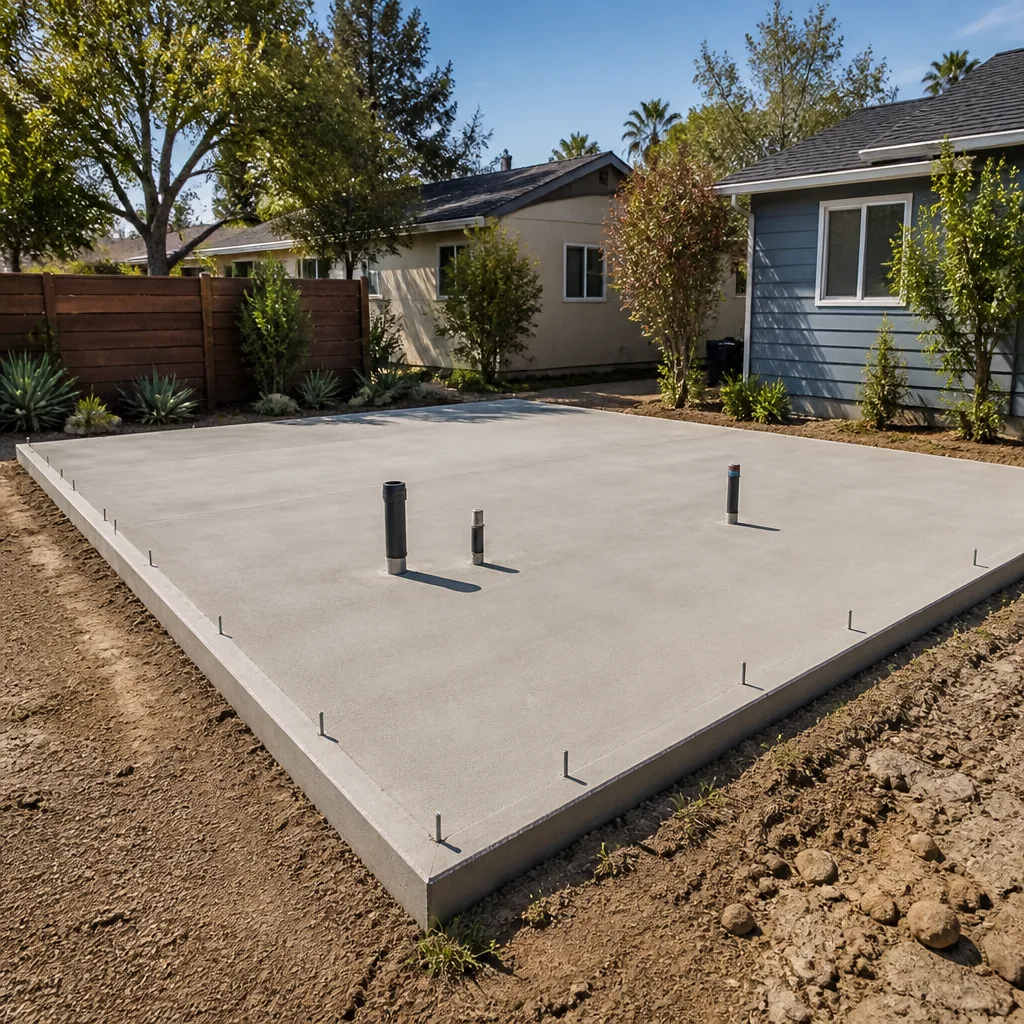
This applies to the full James Hardie plank lineup installed in San Diego: HardiePlank lap siding, HardiePanel vertical siding, HardieShingle, and the HardieTrim boards that finish corners, windows, and utility penetrations. The site prep work is essentially the same whether you have 4×8 panel or 5/16 lap siding, but the utility penetration details differ. Gas lines, hose bibs, electrical conduits, and irrigation stubs all pass through the siding somewhere, and each pass-through needs a specific flashing sequence and proper clearance between the bottom edge of the siding and finished grade.
One compatibility gotcha worth knowing: HardiePanels should never sit directly on soil or concrete without a minimum 6-inch clearance to grade, while HardiePlank lap siding requires a minimum 2-inch clearance from roofs, decks, and horizontal trim, and a 6-inch clearance from grade and any hard surfaces like patios or walkways. We see San Diego homes where pavers were added years after construction, reducing that ground clearance to a half-inch, and water wicks straight up into the siding. When you call us, we’ll note the product code printed on the back face of leftover boards or match the reveal width to identify the exact series. We use OEM James Hardie flashing and touch-up components when possible because the color match matters years later. For the underlying moisture barriers and drainage mat, we sometimes recommend a stronger aftermarket product, and we’ll show you the comparison before you pay for anything.
Signs Your James Hardie Site Prep & Utilities Is Failing
- Swelling or buckling at the bottom course. This means water is wicking up from soil contact or a too-low clearance. James Hardie boards absorb water at cut edges faster than factory-painted faces, and once the bottom edge is saturated, the board begins to warp within one or two rainy seasons. In San Diego, it’s not annual rainfall but irrigation overspray and winter storm events that do the damage.
- Mildew, moss, or rust staining around utility penetrations. When a hose bib or gas line wasn’t flashed properly at install, water gets behind the siding and stays there. The staining you see on the outside means the inside of the wall has been damp longer than it’s been dry, which is the exact condition that quietly rots out sheathing in coastal San Diego’s salt air.
- Weep screed is missing, painted over, or buried in soil. The weep screed at the bottom of the wall is how a stucco or siding system drains condensation and moisture to the outside. In older San Diego homes that now have Hardie siding, the screed often got covered by pavers or painted shut during the conversion. Without it, moisture has no exit.
- Cracks running from the corner of a window or utility box outward through the siding. James Hardie fiber cement doesn’t flex much, so a crack usually means the utility penetration or framing behind it is shifting or swelling. We see this a lot at electric meters and irrigation control boxes on San Diego properties where sprinklers soak the same wall every other day.
- Soil against the house on one side and visible erosion on another. San Diego homes on canyon lots or a southeast-facing slope move water faster than you’d think. When gutters dump at one corner or the grade slopes toward the foundation on one side, that’s a site prep failure that eventually shows up as a siding failure. The utility side matters: any buried line that runs parallel to that wet wall is sitting in saturated soil year-round.
Replacement Cost & What’s Included
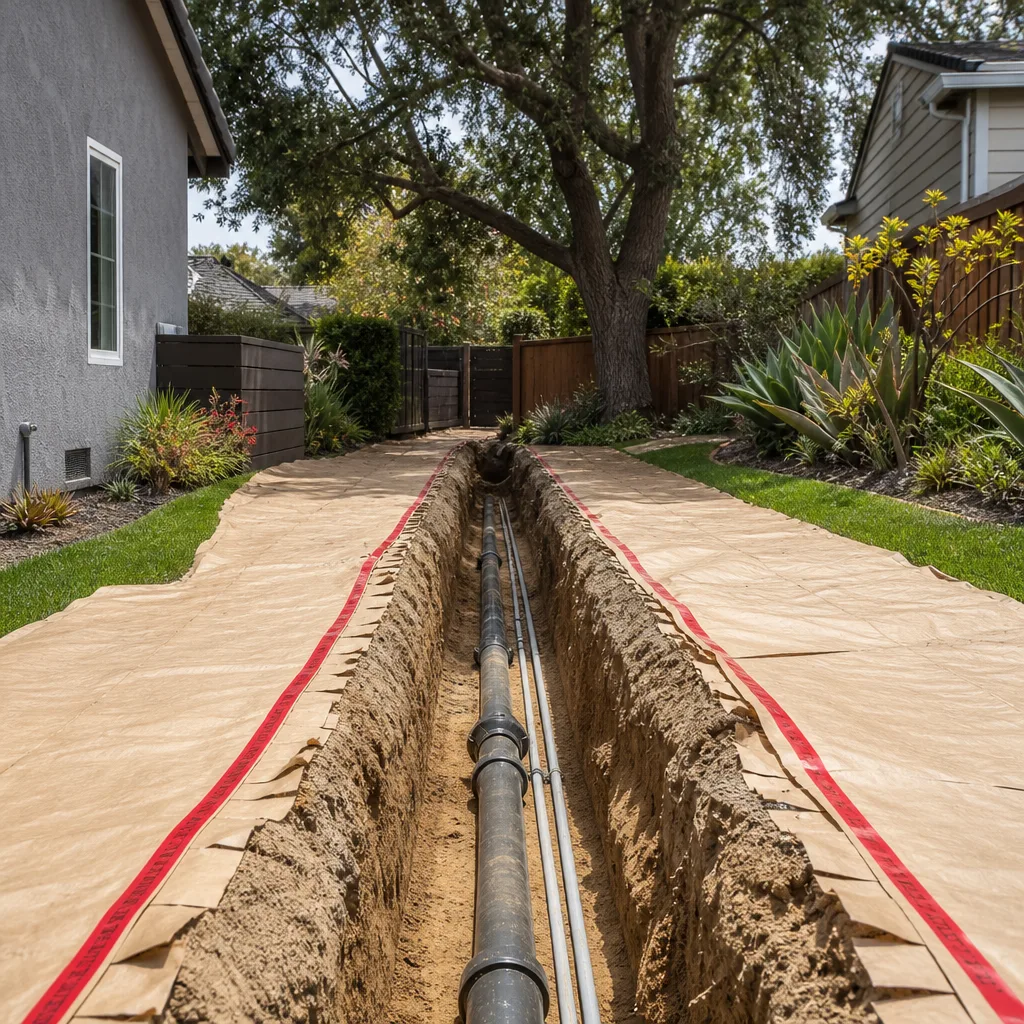
In San Diego, James Hardie site prep and utility correction work runs a wide but predictable range. Small jobs like a single utility penetration re-flash or a 10-foot section of drainage correction land between $600 and $1,200. A typical single-wall site prep correction, where we pull the bottom two or three courses, check the moisture barrier, install a proper drainage mat, reset the flashing at hose bibs and electrical lines, and re-install painted James Hardie boards, runs $1,400 to $2,800. If your lot has significant slope problems, a retaining wall interplay, or a main electrical panel penetration that needs re-routing, that number can go higher, and you’ll see every dollar on paper before we start.
What you’re paying for: the correct James Hardie flashing components, matching touch-up paint so the repair doesn’t announce itself from the street, a drainage assessment that follows the water down and away from the wall, and the labor of a crew that nails spacing, clearance, and sealant joints the way the James Hardie installation guide actually shows. Written price before any work starts, always, on every project. And when we finish, the 365-Day Done Right Promise covers the work. If it’s not right, we make it right.
DIY or Call Us?
There are things you can check yourself without risk. Walk the house and measure the clearance between the bottom of the siding and the ground. If it’s less than 6 inches, or soil has crept up over the years, that’s useful to know before you call. Look at your hose bibs and any pipe coming through the wall: is there a visible gap, cracked caulk, or staining? That’s your report card, not a project.
The cautions come when utility penetration work starts involving the gas line coming into your house. Don’t move, loosen, or re-flash around a gas meter yourself. In San Diego, a gas line penetration that’s leaking behind siding is a Professional’s job, full stop. Same for a main electrical panel penetration with water tracking down the conduit. For drainage field work, digging by hand where your irrigation lines, cable, and electric live means an 811 call and a crew that’s done this twice a week for years. Call (858) 988-6447. We’ll look at what you’ve got, tell you what we’d do and what it costs, and if it’s fine, we’ll tell you that too.
FAQs
Done correctly in San Diego, with proper clearance and drainage, a James Hardie site prep correction should last 20 to 30 years before weather or soil movement asks for attention again. The siding itself can go longer, but the below-siding drainage components are the part with the shorter calendar. If you’re seeing new staining or a soft spot near grade within 5 to 10 years, the original prep wasn’t right, and a correction now costs less than letting it go. Call (858) 988-6447 and we’ll give you an honest read.
Often, yes. If only one board has wicked water and the drainage behind it is intact, we can swap that board and match the paint without touching the rest of the wall. If the drainage mat or moisture barrier has failed behind intact siding, the repair is still possible but needs the bottom courses off to access it. We won’t know until we see it, and the estimate is free.
Most single-wall corrections take two days in San Diego: one day to remove, inspect, and install the drainage and flashing, one day to re-install and paint, with a clean site at the end of each day. If utility lines need to be re-routed or the grade needs building up, add a day or two, and you’ll have that timeline in writing before the shovel moves.
We stock the James Hardie flashing, drainage components, and the common lap and panel profiles our San Diego customers call about. If you have a color or profile we don’t normally carry, we source it through our supplier accounts, and it’s usually on the job site within a few days. For homes using Abodu, Cover, or Dvele wall systems, we work with those brands too, so the parts match the house, not just the generic shelf stock.
If your James Hardie siding is showing signs near the ground or at a utility penetration, call Ben and the crew at Seedling ADU San Diego at (858) 988-6447. We’ll walk the site, write the number down, and you decide from there. Free estimates, always.
Written by Ben Ortega, Owner, Seedling ADU San Diego, serving San Diego and nearby areas.